
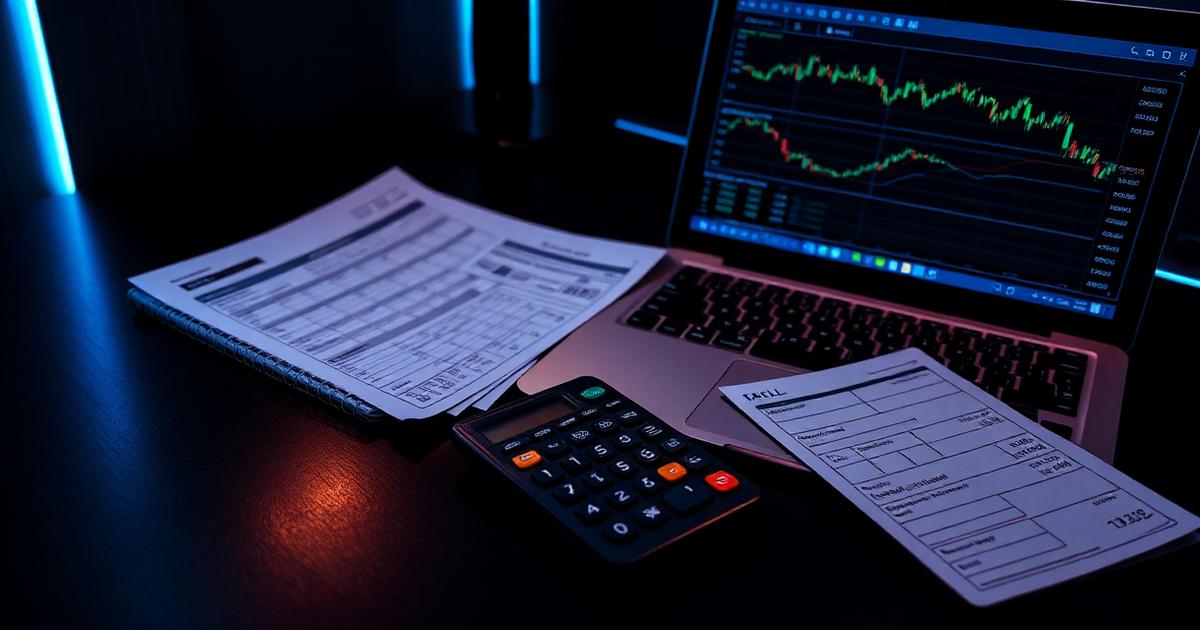
Contract notes, ledgers, P&L statements and bank records — the archive that makes tax season and disputes painless.
Key takeaways
- Download contract notes and ledgers monthly, not annually.
- Keep trading bank transactions separate from personal ones.
- Reconcile broker statements with your own journal quarterly.
Brokers provide contract notes for every trading day, monthly ledgers and annual P&L and tax statements. Download them monthly and store them in a dated folder structure. Retrieval limits and platform migrations make late retrieval unnecessarily difficult.
Use a dedicated bank account for trading. Mixed accounts make it hard to demonstrate the source and use of funds, complicate expense claims and make reconciliation tedious.
Reconcile quarterly. Compare the broker's P&L with your own journal and investigate any discrepancy immediately — differences usually reveal an untracked charge, a missed trade in the journal, or occasionally an actual error worth raising.
For prop payouts, keep invoices, TDS certificates and bank credits together with the firm's statements. A complete file turns filing season into an afternoon rather than a fortnight.
Related guides
Taxation
Taxation of trading income in India: a practical overview
Speculative versus non-speculative business income, capital gains, turnover and audit — what most active traders need to know.
Psychology
A trading journal that actually changes behaviour
Most journals record what happened. A useful one records why, and produces one measurable change per week.
F&O
Nifty versus Bank Nifty: how the two indices actually behave
Composition, volatility, expiry behaviour and what each index demands from a trader's risk model.
F&O
Options for Indian traders: the fundamentals that actually matter
Strikes, premium, expiry, intrinsic and time value — the concepts that determine whether an option position makes sense.
Your edge deserves
real capital
Start today from ₹1,499, trade Equity, F&O, Currency or MCX your way, and get paid in rupees on exactly the terms you were shown on day one.
Trade · Prove · Get Funded — evaluation fee refunded with your first INR payout.